
How Long Do Hair Extensions Really Last? What Changes the Answer
How long do hair extensions last? The most accurate answer is not one number.
Some extensions need to be moved up or reapplied after several weeks because natural hair continues to grow. That does not always mean the extension hair itself is finished. With some methods, the hair can be professionally removed and reused for another installation if it is still in good condition.
At The Wild Hare Salon, the expected wear period for the hair extension methods available in Cincinnati is generally planned around the method, natural hair growth, and maintenance needs, with many installations falling within a 6–10+ week upkeep window.
1. The Installation Has a Wear Cycle
Your natural hair keeps growing after extensions are installed. As it grows, tapes, beads, wefts, or other attachment points gradually move farther away from the scalp.
Eventually, the extensions may need to be:
- Moved up
- Re-taped
- Tightened
- Repositioned
- Professionally removed
- Reinstalled
That can happen even when the extension hair still looks beautiful.
2. The Extension Hair Has Its Own Lifespan
Some types of extension hair can be reused across more than one installation.
For example, professional tape-in systems commonly require maintenance after several weeks but may allow the same hair to be reapplied multiple times. Hairtalk states that some of its tape-in applications last around 6–8 weeks before reapplication, while BELLAMI notes that reusable tape-in hair can last considerably longer when maintained properly.
So when someone says, “My extensions lasted eight weeks,” they may actually mean:
“I wore this installation for eight weeks before my move-up.”
They do not necessarily mean:
“The hair had to be thrown away after eight weeks.”
That difference matters when comparing methods, maintenance, and overall value.
How Long Does Each Hair Extension Method Last?
There is no universal schedule because brands, installation systems, natural hair growth, and home care vary. Still, each method behaves differently.
Tape-In Extensions
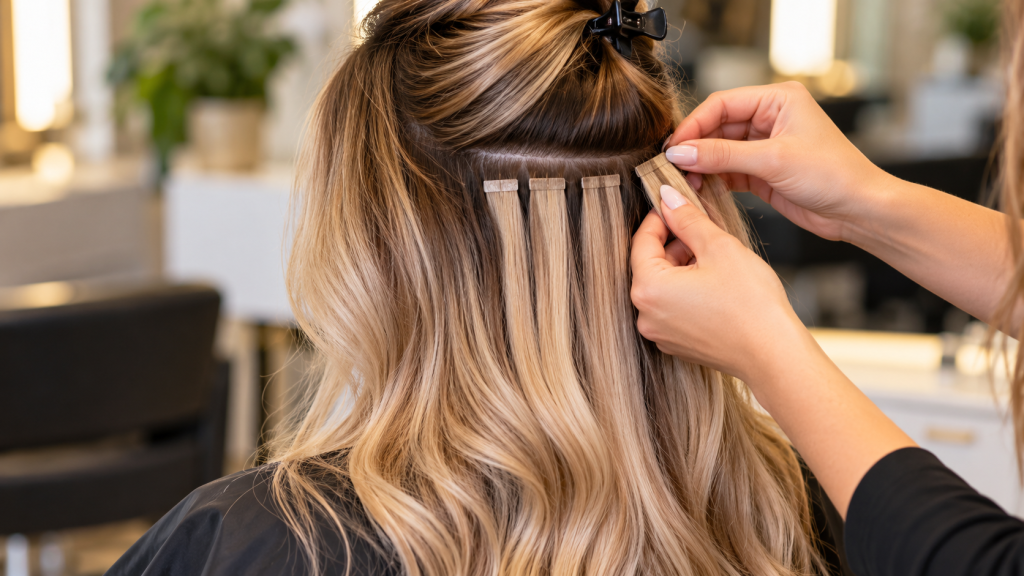
Tape-ins use thin sections that attach close to the natural hair and lie relatively flat against the head.
As the natural hair grows, the tapes move downward. They are then professionally removed, cleaned and prepared as required by the system, fitted with new adhesive, and repositioned closer to the scalp when the hair remains suitable for reuse.
Professional tape systems commonly use maintenance cycles of roughly 6–8 weeks, although individual products and clients can vary. Tape-ins can be a good fit for someone who wants a flatter attachment and is comfortable returning for scheduled maintenance.
Hand-Tied Wefts
Hand-tied or sewn-in wefts create fullness by attaching rows of extension hair to carefully planned sections of the natural hair. The extension hair may be reusable, but the row does not remain in its original position indefinitely. As natural hair grows, the attachment needs professional attention.
BELLAMI notes that sewn-in extension installations commonly fall around a 6–10 week wear cycle before a move-up or reinstall, depending on growth and how the installation is holding. This is a good example of why extension lifespan and installation lifespan should never be treated as the same thing.
I-Tip Extensions
I-tips attach individual extension strands using small links rather than adhesive tape. Natural growth gradually moves those attachment points away from the scalp. Maintenance may involve repositioning the links and checking that the sections are still balanced and comfortable.
The exact schedule depends on growth rate, density, placement, and the system being used. Someone whose hair grows quickly may need attention sooner than a person with slower growth. I-tips are one of several methods currently offered through the salon’s Cincinnati hair extension services.
Keratin Bond Extensions
Keratin bonds use smaller strand-by-strand attachment points. Their maintenance pattern is different from simply sliding a row or re-taping a weft. Many keratin systems are designed for a longer continuous wear period followed by professional removal.
Manufacturer instructions matter here. For example, Great Lengths states that its pre-bonded system can remain installed for approximately four to six months, while its tape system follows a much shorter removal and reapplication cycle. That does not mean every keratin-bond system or every client should follow that exact schedule. The products used by your stylist and the condition of your own hair should determine the plan.
Why Two People With the Same Extensions May Get Different Wear
Method matters, but it is only part of the answer.
Your Natural Hair Growth Changes the Maintenance Date
Extensions do not stay beside the scalp while natural hair grows beneath them. Fast growth means the attachment point moves down more quickly.
As that distance increases, the section has more room to move, twist, and become visible. Waiting simply because the extension hair still looks good can make maintenance more difficult. This is why your next appointment should be planned around your growth, not someone else’s schedule on social media.
Your Hair Density Affects How Extensions Are Supported
Extension weight has to be distributed across enough natural hair. Fine hair, dense hair, short hair, layered hair, and hair with fragile areas should not automatically receive the same placement or amount of extension hair.
Good extension work begins with a consultation that looks at:
- Density
- Hairline
- Crown
- Parting
- Length
- Previous chemical services
- Styling habits
- Desired fullness or length
This is also why someone wanting only more volume may need a different installation from someone trying to add substantial length. A professional haircut may also be used to help the natural hair and extensions blend into a more intentional finished shape.
Your Daily Routine Can Shorten—or Protect—the Wear Cycle
Extensions live through everything your natural hair does: showers, workouts, sleep, weather, styling products, ponytails, and hot tools.
A few habits make a particularly noticeable difference.
Rough Brushing
Dragging a brush through a tangle can pull against attachment points. Instead, start near the ends and work upward while supporting the hair near the attachment area.
Sleeping With Wet Extensions
Wet roots and attachment areas can become harder to manage when they remain damp for hours while the hair moves against a pillow. Drying the roots before bed and loosely securing longer hair can help reduce unnecessary tangling.
Heavy Products Near Attachments
Some adhesives, bonds, and other connection systems do not respond well to heavy oils or conditioners placed directly around them. That does not mean extension hair should never receive oil or conditioning. The placement of the product matters.
Too Much Heat
Repeated heat can make extension lengths dry, rough, and harder to blend.
A heat protectant and reasonable styling temperature help, but extension hair still needs thoughtful handling. For days when you want polished styling without repeatedly working through all the hair yourself, a professional hair blowout can provide shape and movement while keeping the finish controlled.
How Can You Tell Your Extensions Need Maintenance?
Do not wait until an attachment completely fails. Small changes usually appear first.
Watch for These Signs
- Attachment points have moved noticeably away from the scalp.
- Tapes, beads, bonds, or wefts are becoming easier to see.
- Sections feel loose.
- The roots are beginning to tangle around attachment areas.
- Styling the hair has become harder.
- A section pulls or feels uncomfortable.
- The blend looks different as natural hair grows.
- Several extensions are slipping.
- The ends feel dry enough that they no longer blend well.
Discomfort deserves attention too. Extensions should not need to hurt for maintenance to “count.” If an attachment feels wrong, contact the stylist before trying to tighten, cut, glue, or remove it at home.
What Happens at an Extension Maintenance Appointment?
The answer depends on the method.
Maintenance may involve:
- Checking your natural hair and scalp
- Looking for tangles or matting near attachment areas
- Professionally releasing or adjusting the extensions
- Inspecting reusable extension hair
- Preparing the attachment system again when appropriate
- Repositioning the extensions closer to the scalp
- Rebalancing sections if your hair or style has changed
- Blending and finishing the final shape
The important part is that maintenance is not a failure of the extensions. It is part of wearing them properly. Hair grows. Placement changes with it.
Can Hair Extensions Last a Full Year?
Sometimes the extension hair can remain reusable for many months. That does not mean the same installation should remain untouched for a year.
This is one of the biggest misconceptions around extension longevity.
Certain reusable tape-in systems, for example, state that the hair itself may last roughly 6–12 months with appropriate care, while still requiring move-up appointments every several weeks. The extension hair may therefore pass through several installation cycles before it is eventually replaced.
Whether yours can be reused depends on:
- Extension method
- Hair quality
- Condition of the attachment area
- Heat exposure
- Washing and styling habits
- Tangling
- Shedding
- Chemical services
- Professional removal
- Overall condition at each maintenance visit
A stylist should inspect the hair rather than deciding reuse from the calendar alone.
How to Help Hair Extensions Last Longer
You do not need an elaborate routine. Focus on the habits that protect both the extension hair and the natural hair holding it.
Between Appointments
- Brush gently from the ends upward.
- Follow the washing routine recommended for your method.
- Keep attachment areas clean.
- Dry the roots rather than sleeping with them wet.
- Apply conditioner mainly where the lengths need it.
- Keep heavy oils away from sensitive attachment areas unless instructed otherwise.
- Use heat protection.
- Avoid constant high-tension hairstyles.
- Protect longer hair during sleep.
- Keep your scheduled maintenance appointments.
Pro Tip: Do not try to “stretch” an installation simply because the extension hair still looks good. A move-up is often needed because your natural hair has grown, not because the extension hair has worn out.
FAQs About How Long Hair Extensions Last
How often do hair extensions need to be moved up?
It depends on the method and your natural hair growth. The Wild Hare Salon advises that many of its extension methods fall within a roughly 6–10+ week upkeep window, with the exact schedule determined by the method and individual client.
Do tape-in extensions have to be replaced every 6–8 weeks?
Not necessarily. The installation may need to be removed and repositioned after several weeks, while the extension hair may still be suitable for professional reapplication. The exact number of reuse cycles depends on the system and condition of the hair.
Which type of hair extension lasts the longest?
There is no useful single winner because “lasting” can mean longest installation, longest reusable hair lifespan, or least-frequent maintenance. Keratin bonds, tape-ins, I-tips, and wefts follow different maintenance patterns. Choose based on hair condition and lifestyle rather than wear time alone.
Does washing hair extensions make them wear out faster?
Extensions still need to be kept clean. Problems are more likely to come from unsuitable products, rough washing, poor drying, excessive heat, or failing to follow care instructions for the attachment method. Your stylist can recommend a washing routine based on your scalp and installation.
Can you reuse hair extensions?
Some extension methods use hair that may be professionally reused if it remains in good condition. Other attachment systems follow different removal and replacement procedures. Never assume an extension can be reused without having the hair and attachment area inspected.
Why are my extensions slipping before my maintenance appointment?
Possible factors include natural growth, product buildup, oils around attachment points, installation issues, or the attachment system itself. Instead of trying to repair loose extensions at home, have the stylist check what is causing the movement.
Should I remove extensions myself when they grow out?
Professional removal is the safer choice for salon-installed extensions. Pulling, cutting, peeling, or attempting to release attachments with the wrong product can place unnecessary stress on natural hair.